

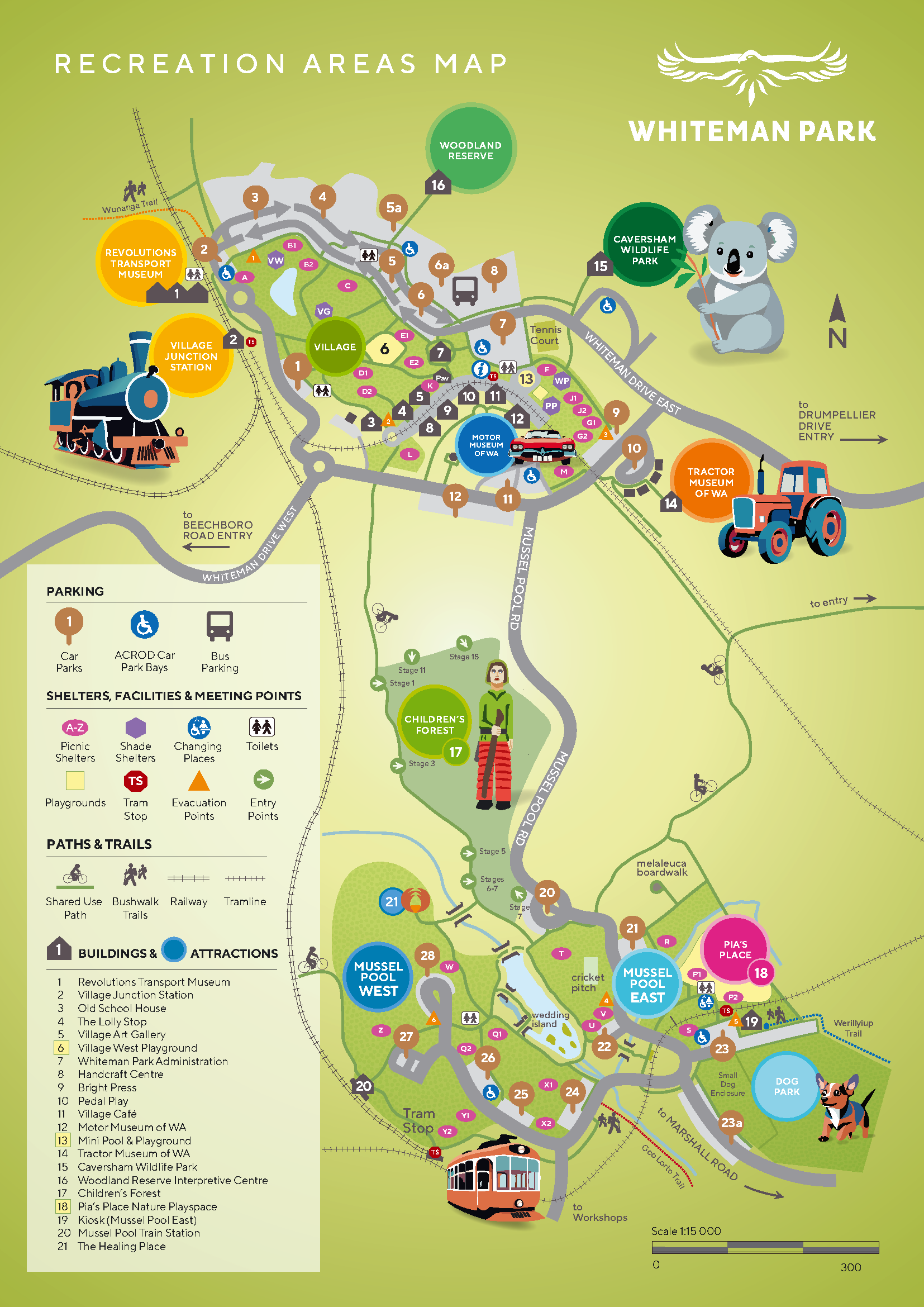

Encompassing 500 hectares of natural banksia woodlands, Woodland Reserve is a specially designed, electrified predator-proof facility located to the north of the Park’s Village precinct.
The Reserve provides protection for those species deemed most vulnerable to decline, with an aim to recreate the bushland to that of pre-European settlement (pre-Swan River Colony) condition. The project is one of Whiteman Park’s major conservation initiatives, funded by the Western Australian Planning Commission, and is a protected sanctuary, free of introduced predators.
Our primary aim is to facilitate the translocation and breeding of a number of native species that are no longer found in the area, such as the critically endangered woylie, as well as those whose survival is threatened, such as the tiny honey possum.
This environmental icon allows visitors an opportunity to see scores of native animals at close range on one of our Nocturnal Woylie Walks, all within a 25-minute drive from the Perth CBD.
The initial introduction of eight woylies (Bettongia penicillata) and a number of quenda (Isoodon fusciventer) in 2010 marked the beginning of this high calibre conservation program for Whiteman Park. Since then numbers of these two species have increased steadily.
The region is also home to a host of endemic species, including the short-beaked echidna, black-gloved wallaby, honey possum, microbats and scores of bird and reptile species.
Four species have now been reintroduced to Woodland Reserve:
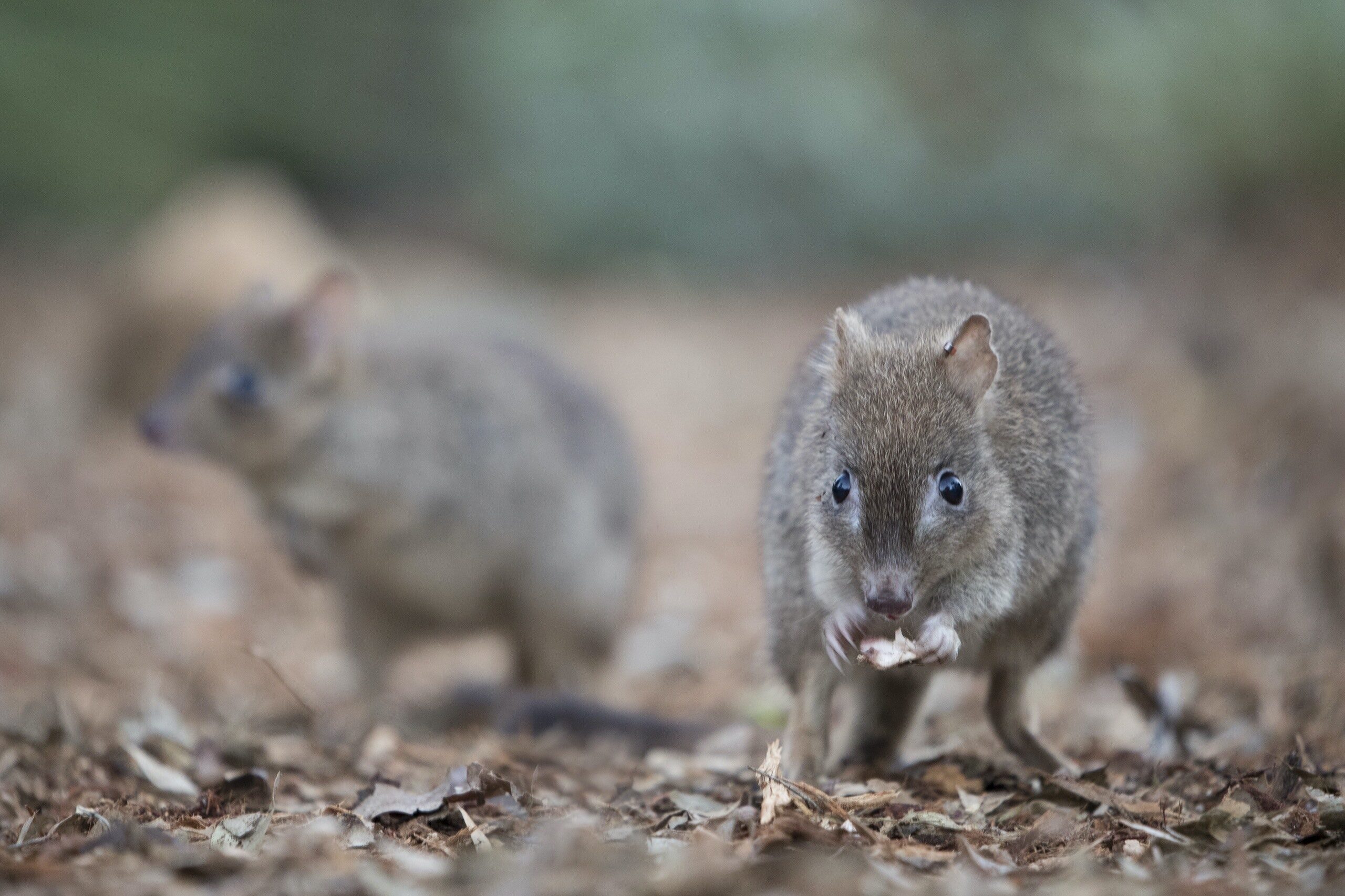
• Woylie (Bettongia penicillata) – The brush-tailed bettong has declined dramatically in the wild and is listed as critically endangered. As the focus species of the conservation program at Woodland Reserve, the woylie has benefitted most from the protection of the reserve and can be seen by visitors foraging in the undergrowth on one of our Nocturnal Woylie Walks.
• Dibbler (Parantechinus apicalis) – Like its fellow small mammals, this small carnivourous marsupial is endangered in the wild due to habitat loss, fire and predation by introduced species.
• Tammar wallaby (Macropus eugenii derbianus) – Another species that has suffered a dramatic decline in the wild, the tammar wallaby is listed as ‘conservation dependant’ in Western Australia.
• Bush stone-curlew – Also known as a bush thick-knee (Burhinus grallarius), the bush-stone curlew was ranked as a ‘Near Threatened C’ Australian bird in 2010.
Planned reintroductions of plant and animal species which are presently extinct or in decline within the Reserve will provide a significant contribution to the protection and management of Australian biodiversity as a whole.
The vision for Woodland Reserve is to create a ‘Swan Coastal Plain landscape containing the natural complement of biodiversity, to be sustained in perpetuity’. Habitat protection is critical to retain and support the area's wildlife communities.
Woodland Reserve encompasses three habitat types of the Swan Coastal Plain: melaleuca damplands, banksia woodlands and vast open heathland.
Banksia species are an essential component of the habitat of the Reserve, as they supply nectar to a wide array of bird species as well as the unique noolbenger / honey possum population. Follicles of this species, in conjunction with fruits from hakea and eucalypts, also provide significant food sources for the threatened Carnaby’s cockatoo (Zanda latirostris).
Within the specially designed, electrified predator-proof facility, the critically endangered woylie (Bettongia penicillata), quenda (Isoodon fusciventer) and short-beaked echidna (Tachyglossus aculeatus) reside, along with numerous species of lizards, owls, micro bats, snakes, falcons, skinks, eagles, hawks, honeyeaters, ducks, insects and more.
In addition to the habitat protection and species renewal, Woodland Reserve is important for its role in promoting awareness of the plight of our native mammals.
It allows the wider community the opportunity to appreciate the importance of regional biodiversity, offering a precinct in which visitors can enjoy and learn of the ecology of the banksia woodland habitat. Its proximity to the Whiteman Park Village makes the Reserve easily accessible for young and old, allowing all family members to experience the woodland wonderland.
If you’d like a chance to encounter the Critically Endangered woylie and observe their nocturnal behaviour, along with other unique native mammals, join us on one of our Nocturnal Woylie Walks.
Whiteman Park has a dedicated group of volunteers who help us maintain and improve the Reserve through weekly volunteering.
Visit the Park volunteering page to find out more about our volunteer program, call us on (08) 9209 6000 and ask to speak to our Volunteer Coordinator, or complete the application form and send it in.
Woodland Reserve is only accessible on a guided tour, so secure your place on our next Nocturnal Woylie Walk.
Visitors to the Reserve will get a chance to see some of these native animals, as well as encountering the heathlands, melaleuca damplands and banksia woodlands of the Reserve – all of which are important habitats for the fauna of the Swan Coastal Plain.